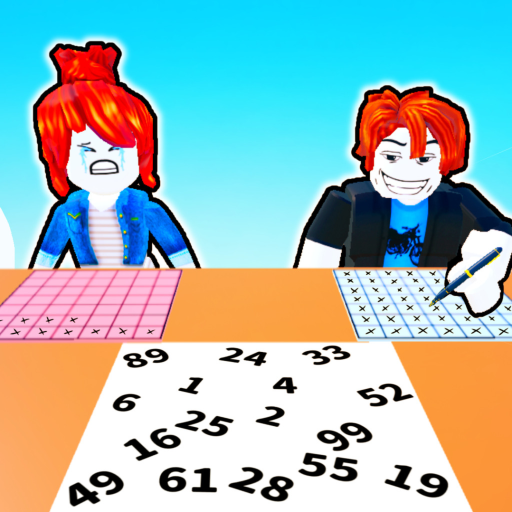
Days 1–2: loop and habits
Play the beginner guide against the real game. Say your role out loud at each switch. Target zero random scans — not fast scans, just non-random ones.
Three guides cover the whole skill tree of this game: the turn loop, the scanning and marking routines, and the official badge ladder. Pick the one that matches your current problem.
Find and Mark! is a party & casual duel by Blue Capybara Studios — launched on Roblox July 3, 2026, servers of 30 players, 76,498,988 visits by 2026-10-03. Two players race over a chosen number: while one searches the page for it, the other marks their own page with X's; the roles switch each turn, and the first player to fill their page wins. The duel itself has no roster to learn — the whole game is finding speed, marking rhythm, and consistency across role switches. Around that duel sit a Money economy, crates, spins, and five optional game passes; only Better Pen touches the race itself, and none of them replace scanning skill. That is why the guide set here is small and deep instead of wide: learn the loop once, sharpen the two roles, then chase the badge ladder.
Short on time? The one-sentence version: scan in one fixed direction, mark in short clean bursts, switch roles without losing your place, and let the calculator tell you whether your pace is badge-fast yet.
Each summary below tells you what the guide contains and when to read it. Facts come from the official description and Roblox badge data; routines are labelled player advice inside each guide.
Read this before your first ranked match — it takes five minutes and saves a dozen confused turns.
The full turn loop with the roles named the way the official description names them: the chooser picks the number, the finder hunts it down the page, and the chooser spends that search window marking X's. Then the switch — and the race to fill the page first. The guide walks all five steps in order, flags the four classic first-match mistakes (random scanning, forgetting the called number, losing your marking position, assuming a hidden board rule), and answers the stuck-state questions new players actually hit.
Read this once your matches feel chaotic. Every routine maps to one of the calculator's inputs, so improvements show up as real numbers.
The scanning-and-pacing playbook: a fixed sweep from one starting edge so you never recheck the same area, a pointer anchor at the last completed row so your eyes can recover after a jump, a deliberate pause that separates recognizing the number from clicking it, and clean marking bursts that always end at a memorable edge. It closes with the comeback rule — when you fall behind, remove duplicate work before chasing raw speed, because one controlled turn beats three rushed ones.
Read this when you want a target. Badge thresholds are the only official measure of progress the game publishes.
Every official threshold in both badge families: wins at 1, 5, 15, 50, 250, 500, and 750; streaks at 3, 5, 10, 25, 50, 100, and 150 consecutive wins — straight from Roblox's badges API with award counts and creation dates. The guide separates lifetime wins from the current streak (they are different economies with different ladders), explains why a 5-streak badge can be closer than your next win badge even when the number looks smaller, and gives a reset routine for the match after a loss.
Turns and time to your finish from your own pace, plus the next official win or streak badge.
Decision guideFinder, Marker, Comeback, and Streak routines ranked with visible confidence labels.
ReferenceRoles, the turn loop, and the full official badge table with award counts and dates.
Play the beginner guide against the real game. Say your role out loud at each switch. Target zero random scans — not fast scans, just non-random ones.
Note your average marks per turn and seconds per role. Enter them in the calculator. Change exactly one habit from the strategy guide and re-measure.
Pick the closer of your next win and streak badges from the milestones guide. Sessions get a finish line instead of a vague grind.
Streak sessions favor repeatability over experiments. One calm reset routine after a loss keeps a 10-streak from dying to tilt — the same principle the comeback section teaches.